
[November 25, 2026]
AI in Healthcare: From Liability to Innovation
Session recap, Data Privacy for Health Summit, Boston, 1 October 2026
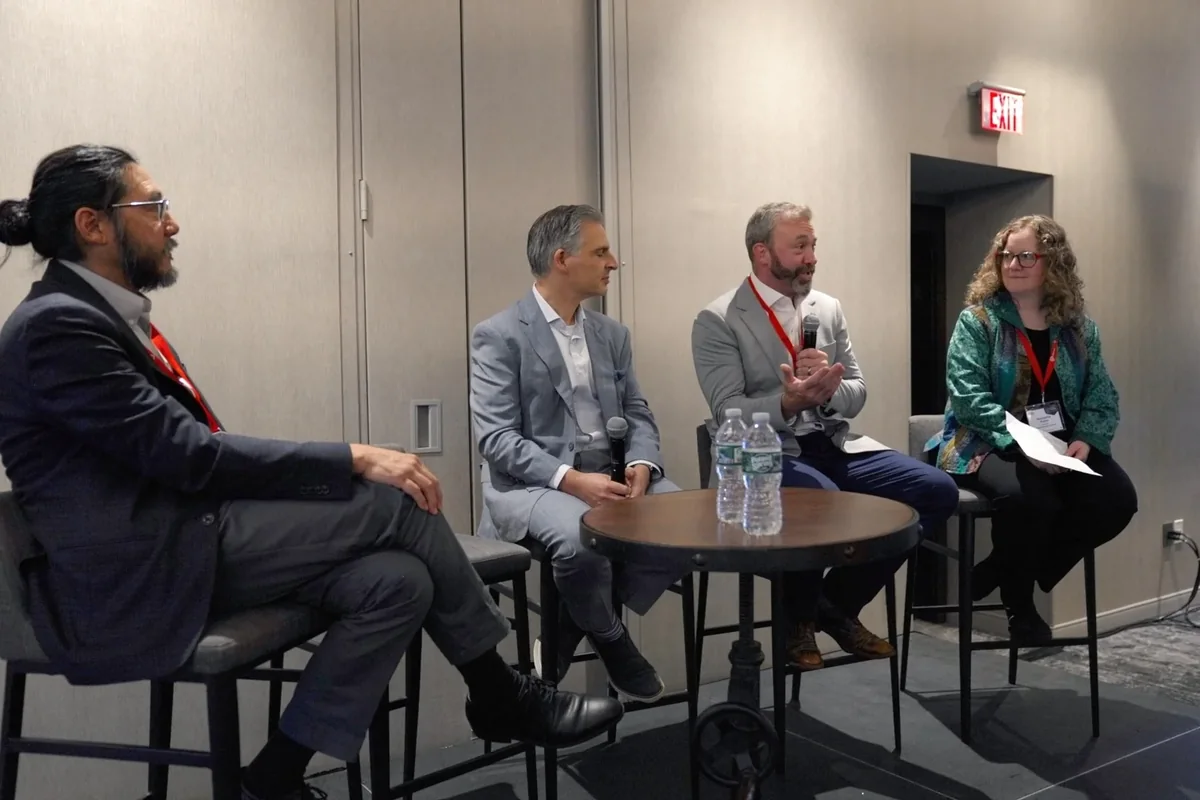
Moderator: Nechama Katan, Founder, Wicked Problem Wizards.
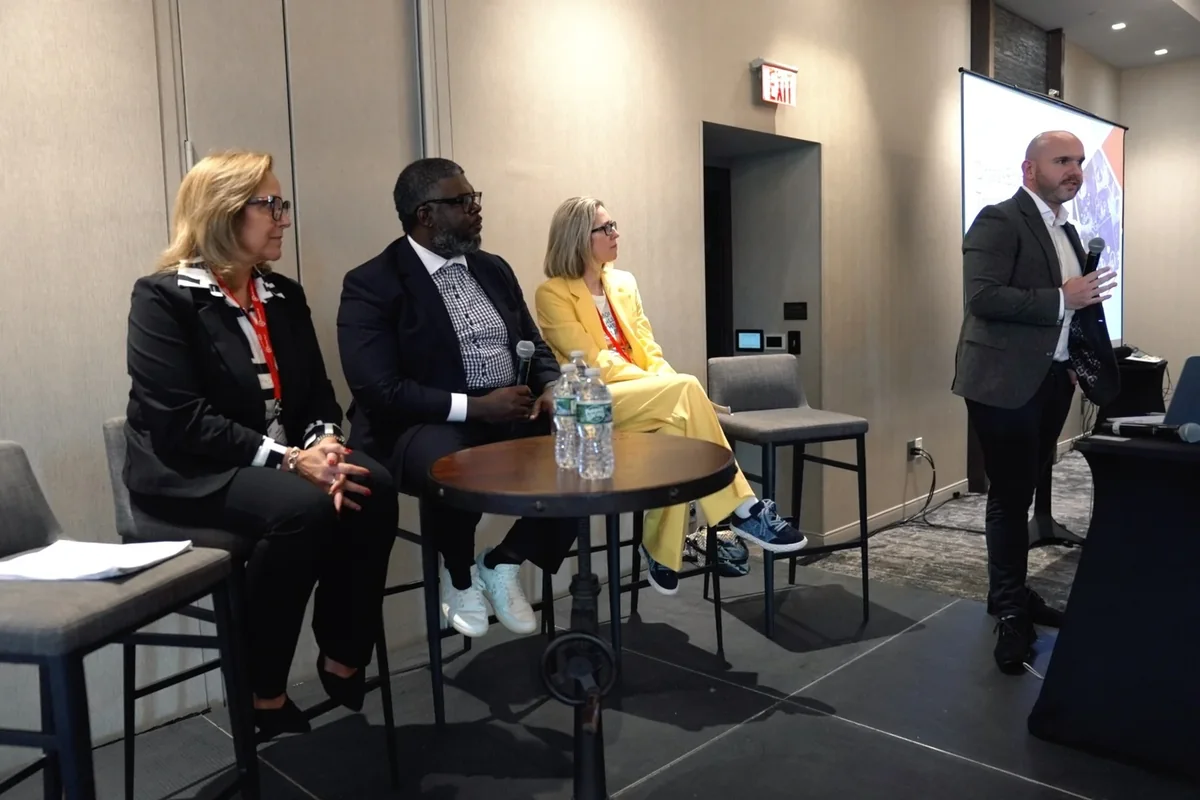
Panelists: Aaron K. Tantleff, Partner, Foley; Stephen O’Loughlin, JD, CCEP, CHPC, Director, HealthEquity; and Clarence J. Wang, Head of Data Sciences at Dyne Therapeutics
After a full day spent on the risks of AI, the closing panel of the Data Privacy for Health Summit in Boston was asked to flip the question. Nechama Katan, whose career has been spent teaching people to use data, most recently on risk-based quality management and the validation of AI in clinical research, promised participants they would leave with two or three things they could apply the next morning. Nechama’s starting point: AI already lives inside organizations. It cannot be governed away or controlled away. If organizations do not learn to innovate with AI openly, people will innovate with it quietly.
What the room expects from AI
Nechama first shared the results of the survey run during the day. Asked where AI will have the greatest impact, participants put data analytics first, followed by workflow and process efficiency. Their biggest concerns were accuracy, reliability and reproducibility. In a clinical trial, validation means traceability, reproducibility and repeatability; generative AI offers none of these by default. Participants also worried that AI is developing faster than medical ethics and governance.
Start from the problem
Asked what separates a team that can innovate with AI from one that cannot, Stephen O’Loughlin, who has worked in healthcare privacy and compliance for some 15 years and spoke in a personal capacity, put collaboration first: departments working together so that the company gets what it needs without unnecessary risk.
Aaron Tantleff, a partner in Foley’s technology transactions, cybersecurity and privacy practice for more than twenty years, gives clients and associates the same answer every time someone arrives with an AI tool they want to use: what problem are you trying to solve? Only then can the team decide whether this is the right solution. A “trusted dataset” is only trusted for a given purpose. Is it a communication tool or part of a clinical trial?
The head of data sciences at Dyne agreed. Like a new laboratory instrument that does a thousand things, an AI tool is only useful if it answers the question in front of the team. For a small company, that discipline avoids wasted time. And the first step is to start governance: an AI use policy and a data security review process for AI tools.
Nechama added an example of what not to do: using generative AI to compare two datasets that already sit in SQL tables is the most expensive possible way to do it, and it will not produce a reliable, repeatable answer.
Innovation needs leadership at every level
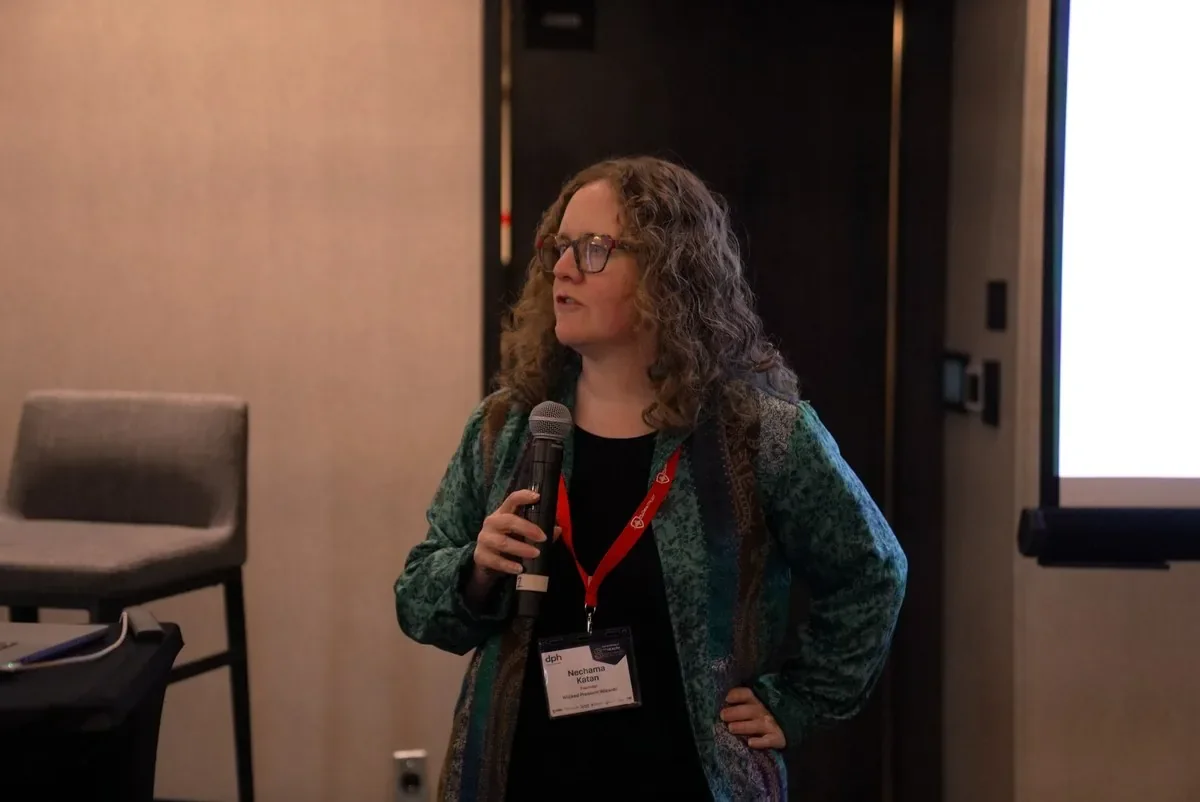
For Nechama, the decisive factor is leadership at all levels. Innovation will come from junior people who ask why validation still relies on screenshots or why datasets are reconciled in spreadsheets with lookups. For decades, the answer in clinical data management was “because the regulations say so”, and people stopped asking after a couple of years. Senior people will have to learn to listen to colleagues younger than their children.
Aaron added a counterweight: junior colleagues may not yet have the experience to judge whether a challenged process is producing the right output. Innovation has to come from the bottom and the top together, which requires an organization able to hold open and difficult conversations. The Dyne panelist clarified that the governance they meant is transparent and inclusive, bringing in the very people who push for new tools, not a dry rulebook imposed from above.
Frameworks you already have
Nechama asked each panelist for one framework participants could take back to the office. Stephen’s answer: AI is just another tool. Organizations already have third-party risk management and onboarding processes. An intake and review process for AI use cases lets people bring their ideas forward, lets the organization validate them and spot redundant tools. Asked how to respond to colleagues who bring a new idea every week, Stephen said that a privacy officer rarely gets good news, so kindness pays: thank people, follow up, and wait for the good idea.
Aaron described a five-level model, inspired by military readiness levels, that Aaron’s clients use to classify AI uses, because a single one-size-fits-all AI policy does not reflect reality: marketing copy and clinical trial support do not carry the same risk. Aaron also insisted on feedback loops. Organizations should look for results, not positive results: an adverse result, such as a tool that was not released because it failed, is useful information. If you do not know when something is not working, you do not know when it is.
Stephen later added a simple tiering: green, yellow and red. Compliance, privacy and legal teams can no longer simply say no; they have to find a way to yes. Treating every use case the same way would drown them; categorizing risk lets them streamline the process. A centralized intake, endorsed by leadership and promoted through roadshows, has worked well, in Stephen’s experience, to bring projects into the open.
AI is always in beta
A quality professional in the audience asked why nobody had mentioned continuous improvement and how to make sure that what was approved six months ago is still how a tool is used. Nechama noted that nobody gets an AI prompt right the first time, and that schools rarely teach iteration: students type an answer and the system says right or wrong.
Aaron’s view: an AI solution is always a trial. Unlike the old days of testing an office software update on a few machines and then releasing it, AI products change constantly; one program Aaron’s team built pushes updates twice a day. Users are told when updates happen so they can report anything that behaves differently, and a feedback button was built in. Organizations that build their own tools should avoid locking themselves into one model or harness, so they can switch without losing their investment.
The Dyne panelist added that continuous improvement in the old sense, a validated version followed by the next one, no longer reflects how software, and even less AI, is delivered. The best governance can do is involve the right people and keep the process transparent. Benchmarks run periodically when a model changes can detect drift, but human reviewers sometimes let changes pass because they are not tuned to them, or because they see them as improvements.
Stephen described a tactical approach: make end users accountable for the output. Policies should state clearly that people own what they produce and will answer for anything they put into production without validating it. Nechama compared it to asking the mechanic to fly on the plane’s first flight, which apparently leads to far fewer mistakes. Nechama added that test harnesses should run regularly against known use cases. Today, a generation of senior people can tell whether an answer is right. In ten years many will have retired, so organizations need to think now about how they train the next generation.
Trust in vendors, and the limits of contracts
Nechama asked how organizations should balance trusted data practices with the risk of moving too fast or too slowly. The Dyne panelist noted a new tension: investors push for AI value, and tools are pushed onto knowledge workers. The life sciences sector’s long effort to build trust around data will help, but trust in AI vendors is a different matter. Even with contractual commitments that data will not be used for training, recent public examples of possible leakage have eroded confidence.
Aaron observed that when such stories appear, clients often ask first about limitation of liability and indemnification. In Aaron’s view, those provisions are close to useless for AI: no liability cap will match the damage, and they only provide capped damages after a long dispute. Aaron described a biotech client preparing a major fundraising round whose proprietary data, worth hundreds of millions, was entered into an AI tool that nobody had vetted; the information proved easy to extract, the funding fell through, and the company headed toward bankruptcy. What protects, in Aaron’s view, is diligence repeated over time. Aaron encourages clients to repeat vendor due diligence at least annually; in that experience, only a minority of companies do full diligence before adopting a product, and fewer still repeat it.
Answering a participant who asked whether lawyers, privacy experts and data scientists could design better contract provisions on derived data and IP, Aaron said the team does use creative clauses, but the principle is “trust but verify”. By the time you send a demand letter or litigate, you have already lost, even if you win.
Shadow AI: why people build in the dark
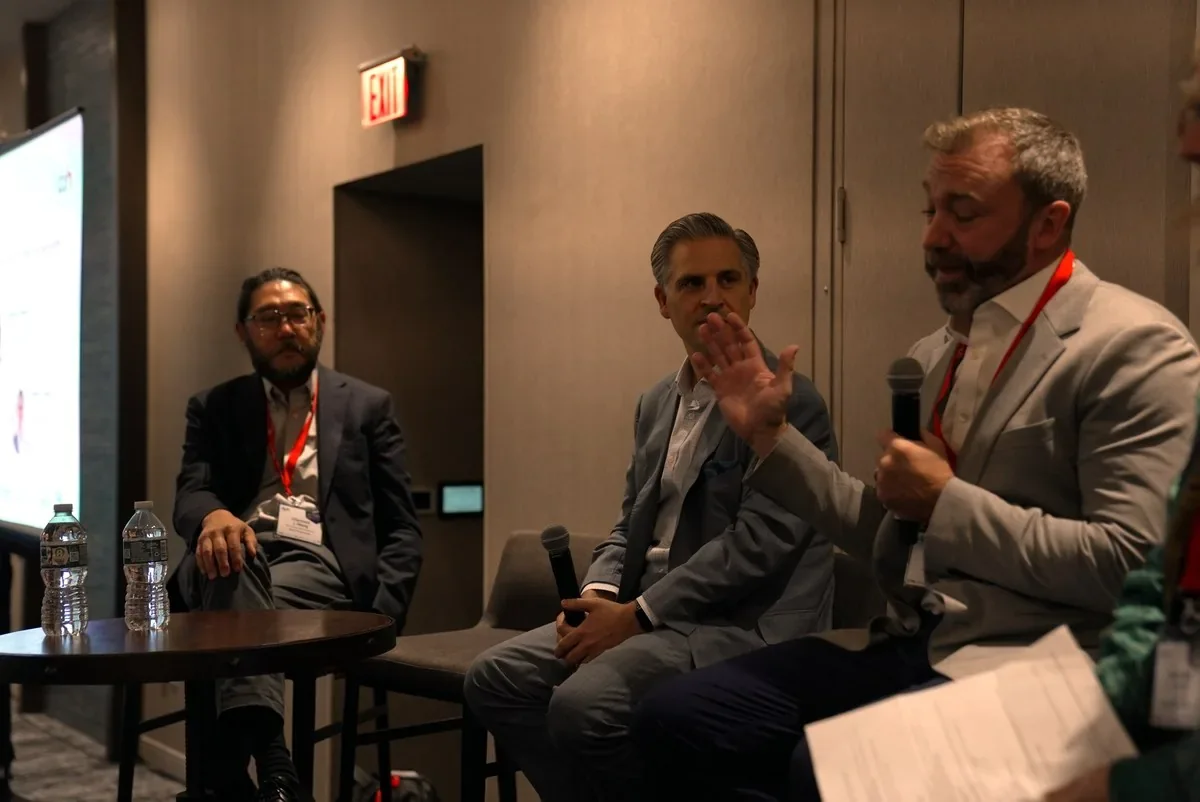
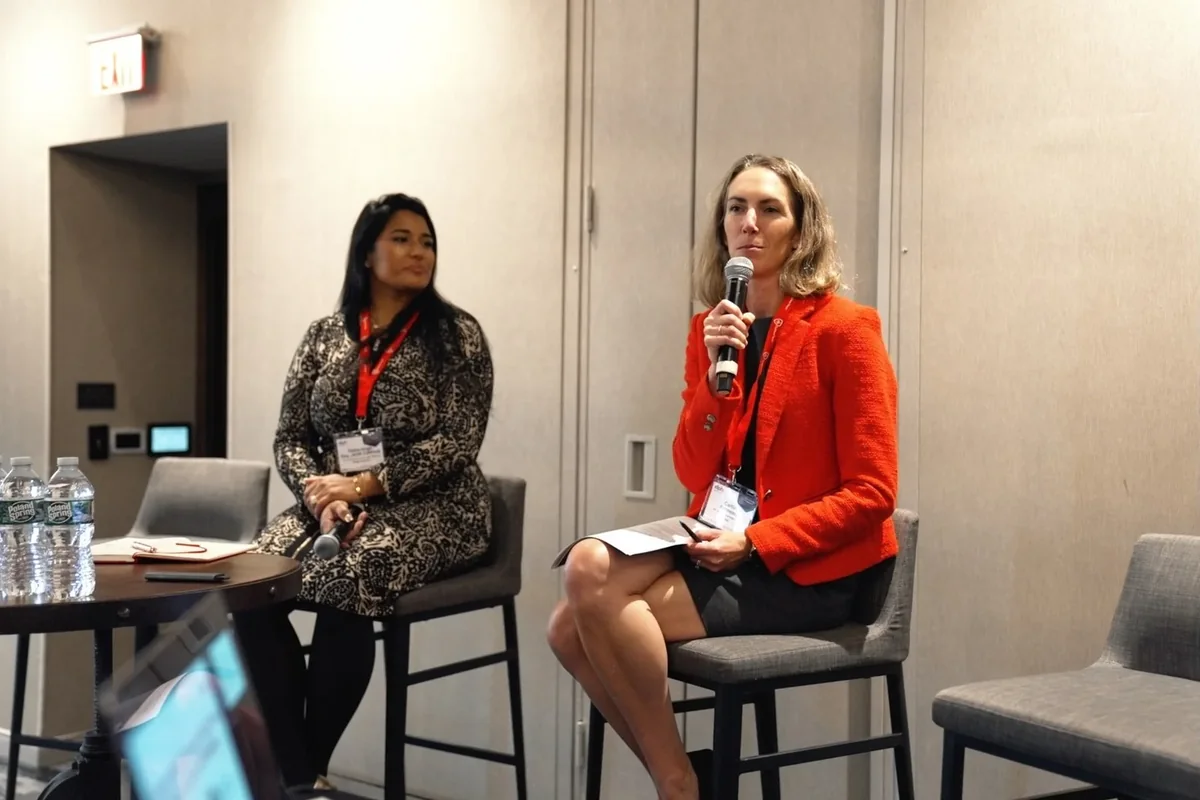
Panelists discussing shadow AI and governance at the closing session of the Boston summit
A participant asked how to balance encouraging innovation with the rise of shadow AI. Nechama’s view: people build in secret because they cannot build in the open. Most would come forward if offered reasonable rules.
Aaron explained why shadow AI is more widespread than shadow IT ever was. Between professional developers and people with no technical interest sits a large majority who now have tools they never had before, and who no longer need to know how to code. Frustrated by repetitive tasks, they subscribe to a tool and have a working app in fifteen minutes. Aaron described a regulated client that discovered employees using personal devices and guest Wi-Fi to run company data through AI tools. Blocking known AI services helped but was not enough. Listening reduced the problem dramatically: town halls, interviews with employees about the tasks they repeat, and an engineering team people can ask for help, with no request too small.
The Dyne panelist recognized the picture: their data science group used to be the company’s shadow IT. Governance, done well, is a way to bring that work into daylight and prioritize what serves the whole research team.
What would you do if you were not afraid to fail?
Nechama closed with a question for everyone in the room. Failure is frowned upon in pharma, for good reasons. But if 30 percent of an organization’s AI projects succeed, it is probably doing well, which means failing 70 percent of the time. Teams will make mistakes, trust a model they should not have trusted, and run into privacy problems. None of that can stop them from innovating, because AI is not going away, and organizations that freeze will find their people moving ahead without them, with worse results.
The discussion on AI will continue at the Data Privacy for Health Summit in Brussels on January 26, 2027, followed by our next US edition in San Diego in September 2027. Explore the Brussels agenda and register.
Read also The Augmented DPO: Where AI Stops, Where Human Judgment Begins and AI Governance: Setting the Rules Before Choosing the Tools.
FAQ
How can healthcare organizations encourage AI innovation while managing risks?
The panel recommended starting with a clearly defined business problem, establishing a centralized intake process for AI use cases, and classifying them by risk level. Generating marketing content and supporting Clinical Trials, for example, require different levels of oversight and validation.
How often should healthcare organizations conduct AI vendor due diligence?
Aaron Tantleff recommended conducting vendor due diligence before adopting an AI tool and repeating it at least annually. Contractual protections, including liability caps and commitments not to use data for AI training, should not replace ongoing verification of vendor practices.
How can healthcare organizations reduce Shadow AI?
Blocking unauthorized AI tools alone is not enough. The panel recommended organizing employee town halls, identifying repetitive tasks employees want to automate, and providing access to technical teams that can help develop approved solutions.
Related Posts
[ November 25, 2026 ]
Cross-Border Health Data Transfers in a National Security Era
[ November 13, 2026 ]
Consumer Health Data Laws, Litigation and the Post-HIPAA Reality