
[November 25, 2026]
Cross-Border Health Data Transfers in a National Security Era
Session recap, Data Privacy for Health Summit, Boston, 1 October 2026
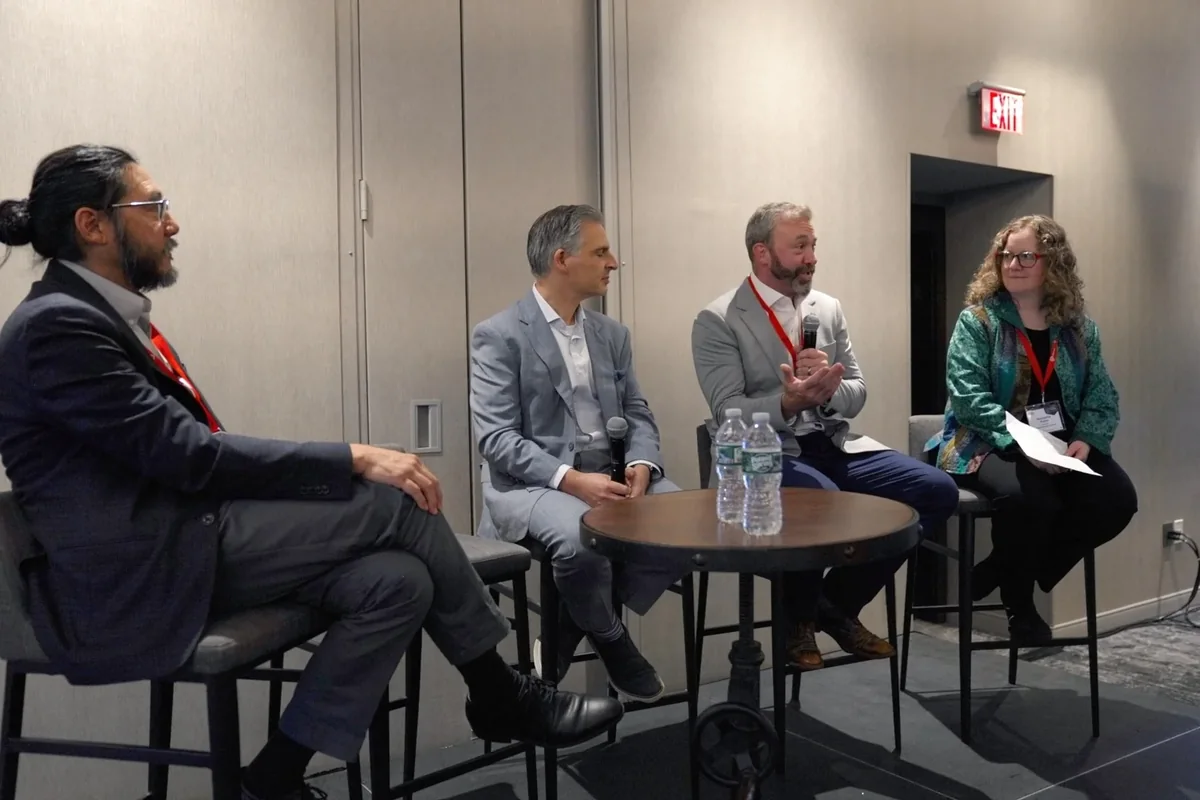
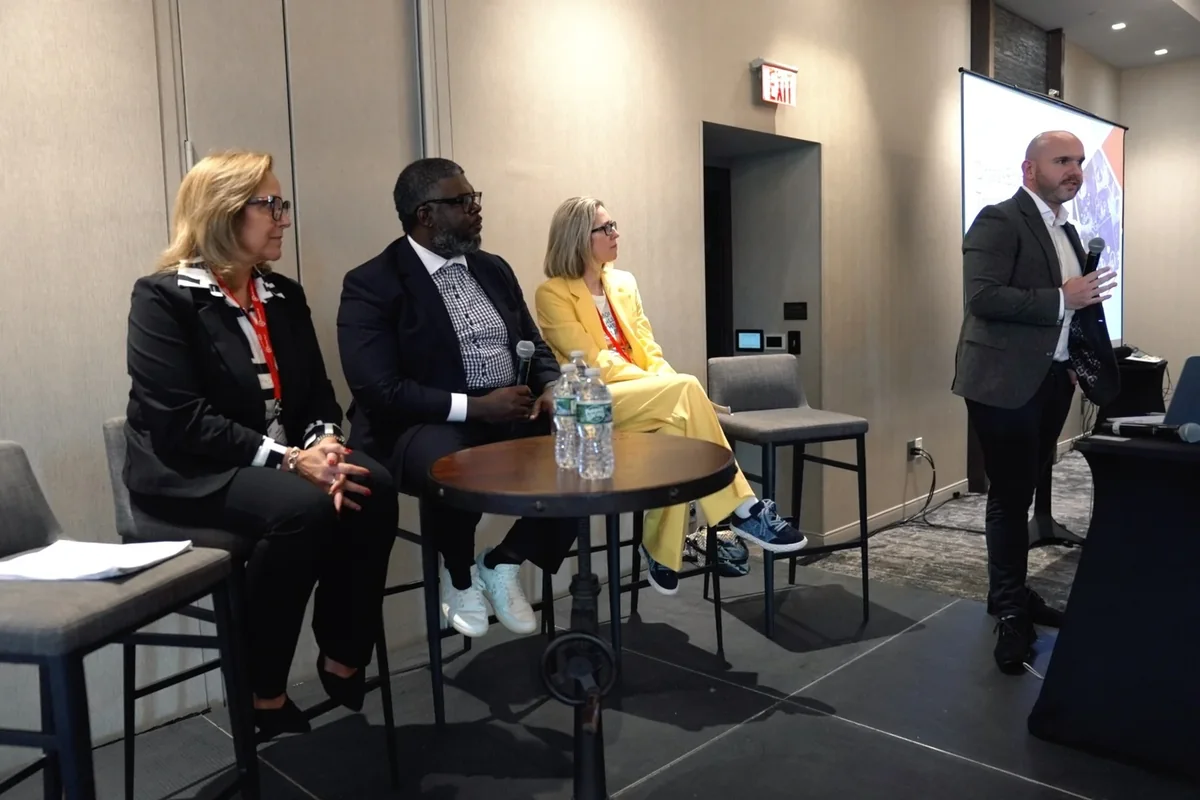
Moderator: Edward Sheehan, UK Entity Director and DPO, MyData-TRUST.
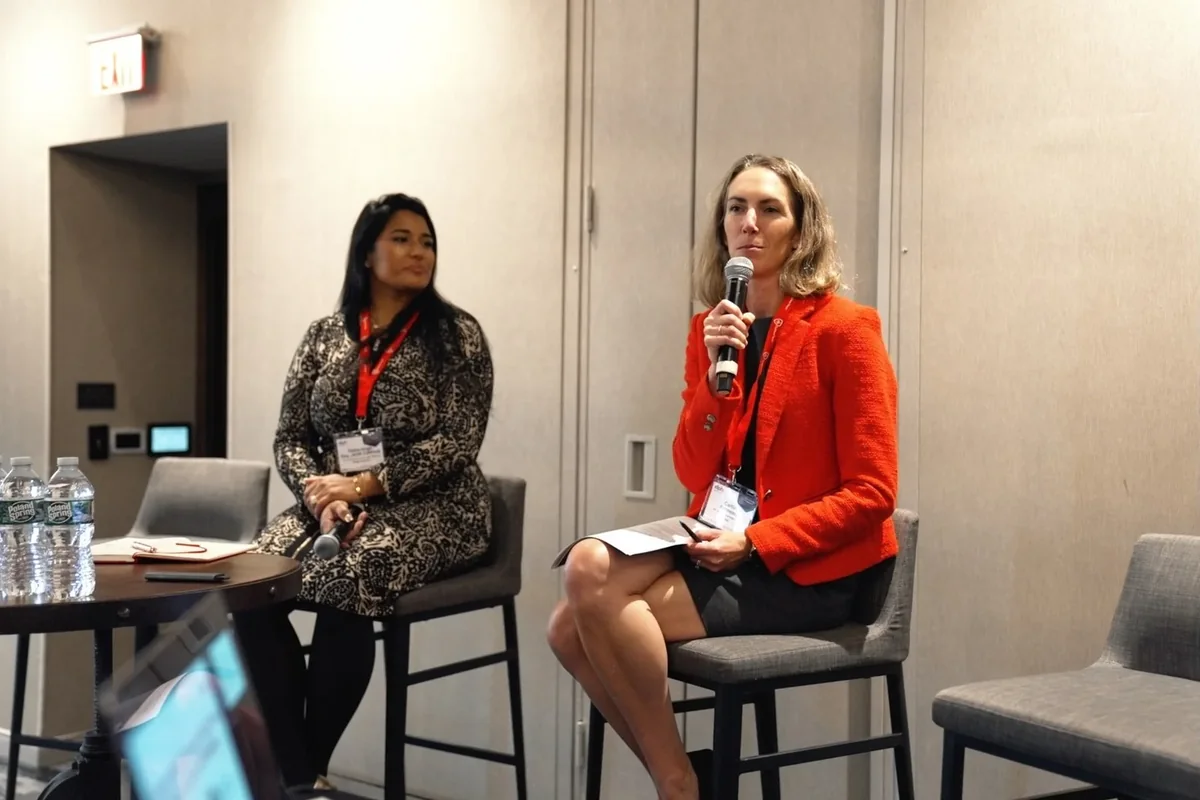
Panelists: Shoshanna Clark, VP, Ethics and Compliance, Kailera Therapeutics; Dondi West, Sr., Assistant General Counsel, Digital, Privacy and Cybersecurity, GSK; Paula D. Buckley, VP, Clinical Operations, Trevi Therapeutics.
For a decade, Life Sciences privacy teams have managed cross-border transfers as a legal exercise: pick a transfer mechanism, sign the clauses, document the safeguards. The panel on cross-border data transfers at the Data Privacy for Health Summit in Boston described a shift: governments now treat health data as a national security asset, and more of the rules that govern it come from national security law. Edward Sheehan, who acts as DPO for several MyData-TRUST clients and previously practiced Data Protection law in Shanghai for nearly seven years, framed the session as a discussion of hypotheticals, without ready-made solutions. All panelists spoke in a personal capacity.
What the room fears most
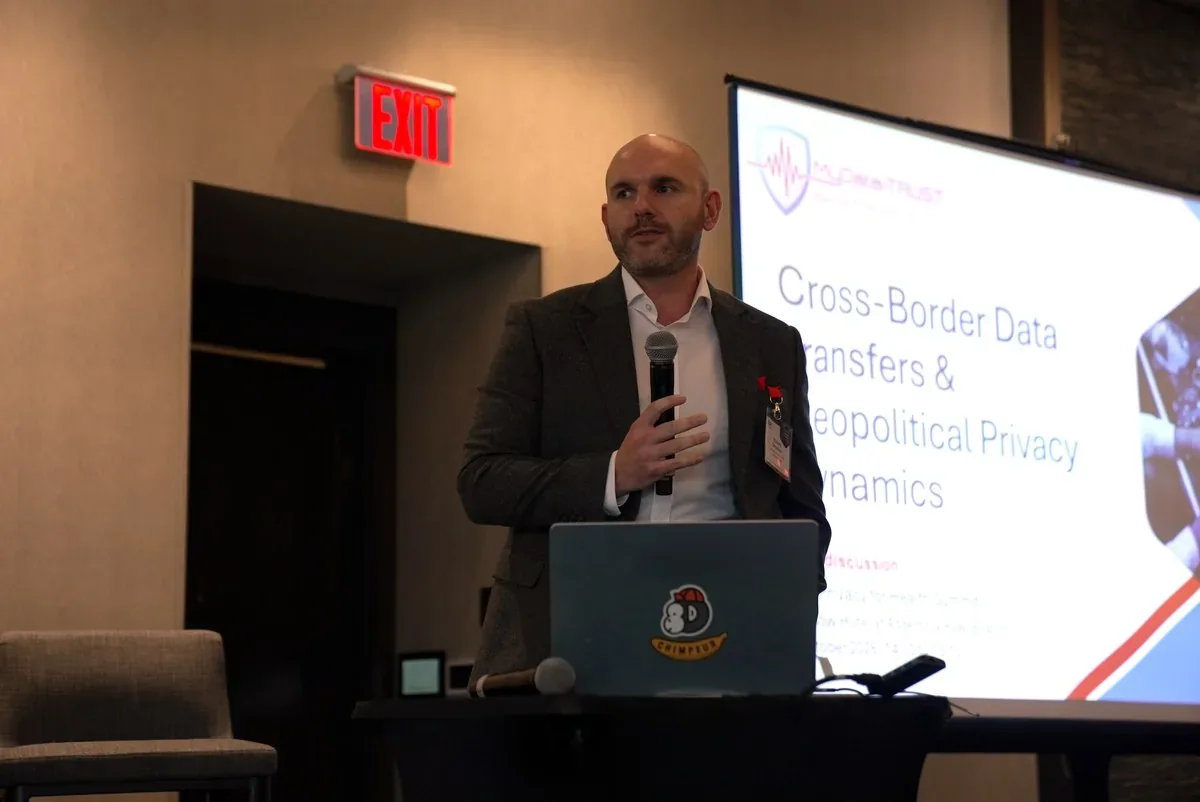
Edward Sheehan of MyData-TRUST introducing the panel on cross-border data transfers and geopolitical privacy dynamics
Edward opened with a live poll. Asked which development worried them most for their health data, participants put US restrictions on who may access Americans’ data in first place, ahead of European restrictions on where data may reside and be reused, then Chinese restrictions on what data foreign parties can receive. A handful chose “something else”.
Invited to describe cross-border transfers in 2026 in one word, participants wrote: chaos, complicated, confusing, annoying, dangerous, increased regulation, “what a pain”, and DOJ. When questioned about how confident they were that they knew where every copy of their health data was stored, most participants answered “reasonably confident”, which Edward translated as confident until someone announces an audit. The second most common answer was “not confident, but I trusted a vendor”.
Edward then retraced ten years of change: the invalidation of Safe Harbor in 2015, the Schrems II judgment in 2020, China’s Personal Information Protection Law in 2021 alongside its cybersecurity and data security laws, a brief easing with the EU-US Data Privacy Framework in 2023, and in 2025 the US Department of Justice rule restricting bulk transfers of sensitive data to countries of concern.
From an open internet to digital borders
Reflecting on what had changed most, Shoshanna Clark pointed to the mismatch between global trials and local rules. Trials and data are now fully global: data is generated in one place, samples are tested in another, and each country has different privacy standards that keep changing. Staying ahead of that mismatch already shapes where Kailera runs trials and which laboratories its service providers may use.
Dondi West, who leads global cybersecurity law at GSK after roles at TikTok and Microsoft and began a career in cyber as an information warfare officer in the US Navy, offered a longer view. The internet was built to be connected, global and free. Bad actors followed. Today every company, small or large, is an involuntary participant in an ongoing cyber conflict: when a nation-state actor attacks, a company may be up against a military. Governments are responding by drawing borders, with inspections and controls, just as they do for physical borders. Understanding that, in Dondi’s view, helps explain where data sovereignty laws come from.
Paula Buckley, who runs clinical operations at a 45-person biotech, described the operational side. A small, publicly traded company with limited time chooses its countries carefully: Trevi works in Europe, the UK, Canada and the US, and does not run trials in China because the complexity would be too great for a company of its size. Coming from quality, Paula welcomes guardrails; before them, it felt like the Wild Dondi. The hard part is translating the GDPR into plain language in informed consent forms.
Europe, the US, China: who restricts next?
Edward asked which scenario was most likely over the next four years if data sovereignty remains a dominant political trend: Europe restricting the outflow and further use of data, the US restricting exports of Americans’ data, China tightening exports of genomic and other strategic resources, or liberalization.
Dondi expected a little of everything. Regulators in every country have legitimate national security concerns: a platform with a billion users could, in theory, allow profiles to be built on each of them. The challenge is to help regulators address those concerns without stifling health innovation and drug discovery. Pharma and health companies have rarely needed to do policy advocacy in cyber and Data Protection, Dondi said, but now they must, because a security-focused law can end up harming patients if nobody explains its consequences.
Shoshanna agreed that all three would happen, incrementally. Europe would probably tighten most broadly. In the US, restrictions would likely be targeted and country-specific, given the industry’s strong lobby. China would be reactive: if others restrict data flows to China, China will restrict flows in return. Shoshanna noted that China has already introduced a security review framework for exporting such data.
Paula explained that the company follows these developments closely, with legal and development colleagues watching for signals. Questions coming back from regulators on submissions often hint at where things are going.

Mass data, health data and technical safeguards
Edward asked Dondi how experience with hundreds of millions of social media users translates to Life Sciences, where each record is more valuable and the consequences of foreign access more serious. In Dondi’s view, it does not differ much. Dondi helped design and implement Project Texas, which keeps US user data in the United States, and saw the start of a similar project for the EU, Project Clover, both publicly documented. Governments take these issues extremely seriously, and the US executive order on bulk sensitive data is one of the few measures that has carried across administrations of both parties, and Dondi does not expect it to go away.
Edward then raised the Irish Data Protection Commission’s finding that standard contractual clauses alone did not adequately protect data transferred to China in the TikTok case. In Life Sciences, data is often pseudonymized, but genetic data can never be truly pseudonymized. What supplementary measures should sponsors look for? Dondi’s answer: think of protection as a moving target. Anonymization, pseudonymization or synthetic data that resists reverse engineering today may not in six months. Review safeguards at least every six months, perhaps quarterly, rather than every few years or whenever a new law passes.
Devices, couriers and samples
Asked where data flows fail in practice, Paula gave an example from Trevi’s trials. The primary endpoint relies on a cough monitor worn by patients at home for 24 hours. In the first study, run in the UK during COVID with patients with idiopathic pulmonary fibrosis, patients returned devices by post, and some were lost along with their data. The company now uses a courier arranged directly between the site and the patient, so that the sponsor never sees names or addresses. Even so, a courier error can turn into a data breach that must be handled. Newer devices let patients upload data directly from home, which removes a weak point. Most patients accept the courier; those who do not can bring the device back themselves.
On genetic data and possible localization requirements, Paula explained that Trevi uses central laboratories within the same company group, one for North America and one for the UK and Europe, so European data largely stays in Europe. Samples are kept for a limited period and only for the purpose of the study, which the informed consent states clearly and which ethics committees always check.
The questions asked too late
Shoshanna admitted that Data Privacy is not yet built into Kailera’s decisions on where to run trials; the drivers are patient recruitment and relationships with regulators. Kailera is two years old and already runs global phase 3 trials in 11 countries with 200 sites and 4,700 patients, along with four other programs. Anything that is not a problem today becomes a problem for tomorrow. Privacy issues flagged early tend to land in that bucket, until data stops flowing and the DPO gets a call.
Shoshanna’s example of a question asked too late: when the company in-licensed assets from a Chinese partner, nobody asked how the data generated in China would get out of China. That conversation should happen while the deal is negotiated: are we acquiring samples, data, or only development rights? And what will the partner, who may be filing in China, need back from us? On the clinical side, it is a series of small surprises: samples sent to Singapore that German regulators object to, another ICF amendment. Tomorrow’s problems, Shoshanna said, have become today’s.
Dondi’s advice was empathy: understand the national security concerns behind each law. Where there is no compliance checklist or legal precedent, that understanding lets you design an approach that satisfies the regulator’s real concern. Paula stressed that Trevi chooses countries for their key opinion leaders and patients, not for convenience, and that regular meetings with its DPO help it look ahead.
Beyond the GDPR
A former DPO in the audience argued that clinical trial law takes precedence over the GDPR in many respects, for example on the right to be forgotten. Shoshanna replied that Kailera relies on impact assessments, robust informed consent and close engagement with ethics boards; in Shoshanna’s experience, the GDPR has not been the obstacle, while getting data in and out of China has. Edward added that we are almost in a post-GDPR world: DPOs now deal with national security laws that rarely include carve-outs for other legislation, so their role must extend from GDPR compliance to the whole framework governing data. Shoshanna confirmed that Kailera now considers likely US national security measures when deciding when and where to run trials.
Dondi offered a grounding question for complex cases: would I be proud if this decision made the front page of the New York Times, and could I look a patient in the eye and explain it? Shoshanna’s version: are we truthful and not misleading with participants, and is our informed consent robust?
The last audience question concerned “harvest now, decrypt later” attacks and post-quantum cryptography. Dondi encouraged every global company to define its “Q-day”, the date by which it will be post-quantum ready, and mentioned an industry commitment led by GSK for pharmaceutical companies to become quantum-ready.
What sponsors can do now
As Edward had announced, the panel offered no single solution, and a contract alone no longer settles a transfer question. The practical advice for sponsors: know where their data and samples really go, ask data questions while deals are negotiated, review technical safeguards on a short cycle, and take part in the policy conversation before security-driven rules are written without them.
Cross-border transfers from a European perspective will be on the agenda of the Data Privacy for Health Summit in Brussels on 26 January 2027. Explore the agenda and register. The Summit will then head to San Diego for its next US edition in September 2027.
Read also The US Privacy Framework, from Clinical Research to Commercial and From Compliance to Trust: Privacy as a Competitive Advantage.
FAQ
How are national security laws affecting Cross-Border Health Data transfers?
GDPR compliance alone is no longer sufficient. The US Department of Justice rule restricts bulk transfers of sensitive data to countries of concern, while China has introduced security reviews for certain data exports. Sponsors must assess national security requirements alongside traditional Data Protection obligations.
What challenges do Cross-Border Data Transfers create for Clinical Trials?
Restrictions can influence trial country selection, laboratory locations, and biological sample shipments. During the panel, Trevi Therapeutics shared how it uses separate central laboratories for North America and Europe, while Kailera Therapeutics highlighted regulatory objections to samples being shipped to Singapore.
When should Clinical Trial Sponsors address Data Transfer requirements?
During the initial deal negotiations. Drawing on Kailera Therapeutics' experience with a Chinese licensing partner, Shoshanna Clark emphasized the importance of clarifying whether a deal involves samples, data, or development rights, and identifying data transfer requirements in both directions.
Related Posts
[ November 13, 2026 ]
Consumer Health Data Laws, Litigation and the Post-HIPAA Reality
[ November 25, 2026 ]
AI in Healthcare: From Liability to Innovation