
[October 29, 2026]
The US Privacy Framework, from Clinical Research to Commercial
Session recap, Data Privacy for Health Summit, Boston, 1 October 2026
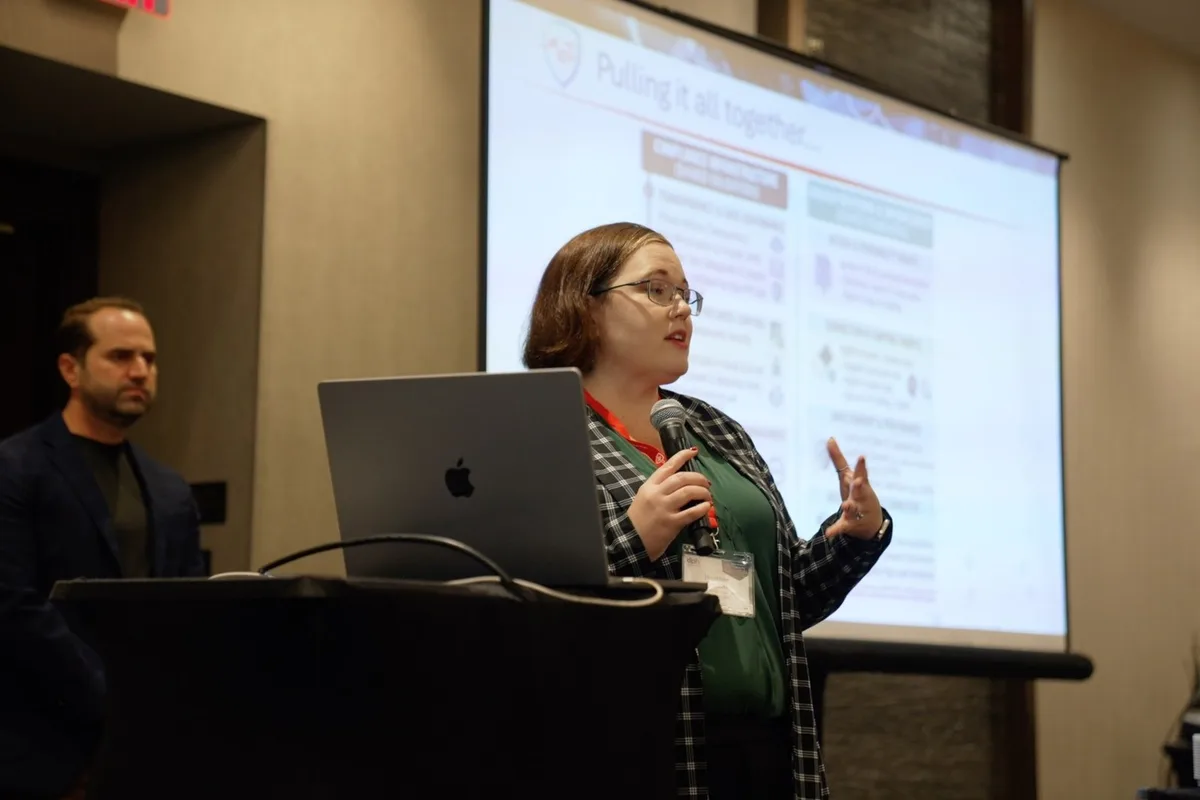
Speakers: Heather Carson, JD, PhD, US Entity Director and DPO, MyData-TRUST;
Michael Demo, Owner, Proctored.
The Boston Data Privacy for Health Summit opened with a practical question for US Life Sciences organizations: the same health data record lives under different privacy rules as it moves from a clinical trial to development, then to commercial use. Heather Carson set out the legal map. Michael Demo, who runs quality systems and technology implementation at Proctored, showed what it looks like for a clinical operations team on “a standard Tuesday”. Michael described the result as a design problem more than a legal one.
Who holds the data, why, and can it be linked?
Heather Carson began with consent. Organizations often assume that once a study participant has consented, the data can be used. That assumption does not hold. In research, consent covers the procedures, the use of the data, and often additional research on biosamples. Future research and secondary analysis must be supported by that original consent, and participants have the right to decline future use. Importantly, the data of participants who decline future use must be flagged so that the limits of their consent are respected over time.
The regulatory status of a dataset changes during its life cycle. A dataset may start as clinical trial information containing protected health information or pseudonymized data. It can then become a limited data set or a de-identified dataset when it moves to a research or technology company, and end up as consumer health information inside an app. Each time the data moves, Heather said, three questions apply: who is holding it, why they are using it, and whether it is still identifiable or linkable. HIPAA attaches to the entity that holds the data, not to the data itself, which is why the answer can change at every handoff.
Heather then addressed one of the most frequent questions from operational teams: why does the law care about coded or pseudonymous data if nobody can tell who it belongs to? Because coded data can still be linked back to the individual. The risk may be small, but it exists. The Department of Health and Human Services recognizes two routes to de-identification. Under expert determination, a person with appropriate knowledge of statistical and scientific principles certifies that the risk of re-identification is very small. Under safe harbor, eighteen identifiers are removed. Once either route has been followed, the data falls outside HIPAA and most state health privacy rules.
Federal, state, and contractual obligations
Heather then walked through the three layers of obligations a US life sciences company manages at the same time.
At federal level, the requirements are organized around transparency (consents, privacy notices, HIPAA authorizations), governance and accountability (data minimization, breach notification, record retention and disposal), individual rights (access, portability, correction) and security duties.
State laws mirror many of these obligations and apply to both health and consumer data: rights of access, correction and deletion, the right to opt out of sale and use, and increasingly the right to opt out of profiling and automated decision-making, with additional consent for sensitive data. On the business side, states now require privacy notices, data minimization, mandatory vendor contracts, reasonable security measures and, increasingly often, risk assessments and higher protections for minors.
The third layer is contractual, and those obligations depend entirely on what was signed. Heather recommended using a corporate playbook that defines what is acceptable in contracts, and described three trending requirements. First, restrictions on data use are now common, and many master services agreements explicitly exclude training AI on the client’s data. Second, technical and organizational measures are no longer confined to standard contractual clauses: Heather sees them more and more as exhibits to the MSA, sometimes in the body of the agreement itself, often without input from privacy counsel or information security teams. Finally, performance metrics are moving into the contract: who does what with the data, within what time, how errors are reported, and the penalties for non-compliance.
As an attorney, Heather said, the goal is always to give clear guidance that supports innovation while maintaining compliance. In practice, that is not easy, because operational teams do not always know what the contracts expect of them, which is why legal teams need to work hand in hand with their operational partners.
In Heather’s summary, data subjects must be informed and must consent; data must be kept secure and used in a limited way; and the organization must know where the data goes, why, and how it is protected in transit and at rest.
The rules change underneath the data
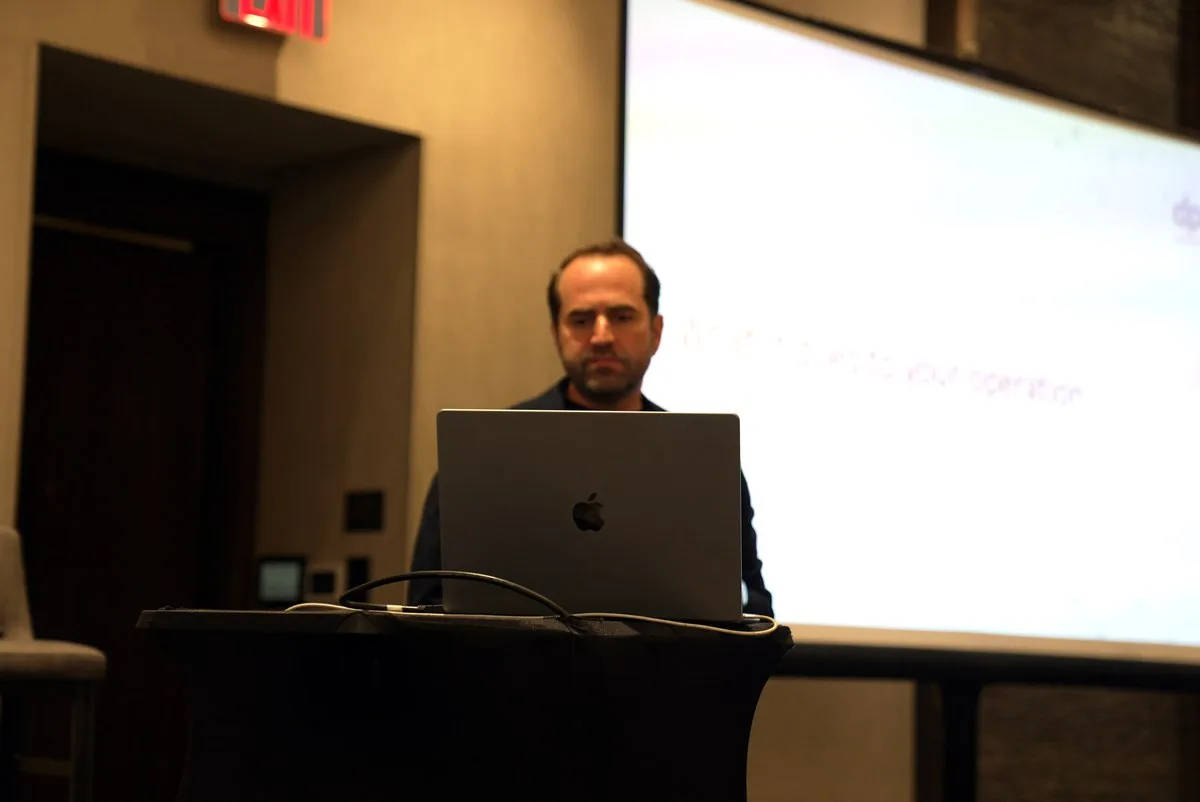
Michael Demo of Proctored explaining what changing privacy rules mean for clinical operations teams
Michael Demo opened the second half of the keynote with a question to the room: could anyone name every set of rules that a single patient record or protocol has lived under since the day it was collected? The question illustrated the complexity of the task. As Michael explained, it is the result of the situation Heather had just described. Privacy law is organized around who you are as an organization, while the data is organized around what you do with it. Operational teams live in the gap between the two.
Michael gave an example. A patient enrolls in a trial under an IRB-approved consent. The drug is approved. Two years later the patient is on therapy, calls the company’s hub for copay help, signs up for medication schedule adherence text messages and finds the company again through a symptom checker on its website. The same person now has four records with the same company, collected by different teams and often different vendors. Some of that sits under HIPAA, much of it does not, and almost none of it traces back to the original trial consent. This is where consumer health privacy laws, with California leading, begin to bite. The research side has a governance model; the commercial side has often never seen it.
Contracts add another layer. On a single study, the sponsor agreement may require data to be deleted or returned at study close plus a set period. The site agreement may impose four more years of retention. The eClinical vendor’s terms may allow it to keep and de-identify data to improve its AI products. Each clause was negotiated by a competent person, Michael said, but operations then has to reconcile four sets of obligations. When Michael asked who could produce the company’s strictest retention term across all contracts by the end of the day, only three or four hands went up.
Consent is where it most often breaks. Samples collected for safety labs may, three years later, be wanted for exploratory biomarker analysis. That is good science. But if nobody reads the original consent form, the question of whether the data can be used is never asked, and ignorance is not a defense if the use is later challenged.
Readiness as a byproduct, not a project
Michael credited auditors and regulators with a clear principle: they want proof, no more and no less. Organizations, Michael argued, should treat their data the same way. If a single obligation takes three weeks of work to evidence, the organization is probably far from compliant, and an audit passed by luck should concern leaders more than reassure them.
Michael challenged the familiar audit “war room” approach, where teams have to pause their day-to-day work to prepare the trial master file. If that is necessary, the systems are not producing the outcomes they should. Readiness should be a byproduct of the process: the reference system should be ready at any moment because every system feeding it does so as part of normal work.
Michael proposed thinking in gates. Data is collected in research, passes a gate into development, then another into commercial. At each gate, someone must own the data and be accountable for the handoff. Rules have to be executable by design: a 25-year-old engineer building the data model is not a lawyer, and if privacy controls cannot be stated explicitly enough to be built into the system, the organization is creating opportunities for failure. Controls should not depend on whether one person remembered to update an audit log. Evidence should be gathered as the work happens, so that the organization is never more than a day behind its own data: anyone should be able to log into the reference system and see where things stood as of last night.
For Michael, this is also a matter of respect for participants. Patients give companies an enormous amount of trust and data to advance medicine. Clear ownership and accountability at every handoff are what the law and the contracts require, and in Michael’s words, the right way to do business.
Michael sees AI as an enabler that lets people “move mountains”, and also as something that exposes gaps at scale. An organization that feeds models without guardrails on top of weak data foundations may find it impossible to know how far out of bounds it has gone. The controls planned at the design stage are what allow teams to use frontier tools safely.
What the room asked
Asked how vendor KPIs are emerging across the industry, Michael warned that the answer would be unpopular: commercial incentives can shape vendor processes, and KPIs are often only defined a year into the relationship, when governance is being built after the fact. They have to come first. Heather added that KPIs are usually hidden in service level agreements, statements of work or individual paragraphs that legal reviews quickly and operations is rarely asked about, often because contracting teams are working against their own deadlines.
Another participant asked Heather to expand on the move of terms from standard contractual clauses into MSAs. Heather, whose background is in academic medicine, explained that SCCs used to sit in a separate agreement or exhibit. Today, sections on technical and organizational measures that would normally be annexes to a data processing agreement appear directly in the MSA. The intention is to manage risk, but it is often done without privacy counsel.
A final question asked whether US organizations see new regulations as a burden or an opportunity. Almost always as a burden at first, Heather said, but savvy compliance professionals can present regulations as a way to deliver better services and to make audit preparation easier, because a known data flow is a data flow you can evidence. Michael closed with a line from a former quality director: “A CAPA is not a four-letter word.” Findings and new rules are how organizations improve, as long as they are structured for growth rather than penalty.
A practical exercise: follow one piece of data
The keynote ended with homework. Take one piece of data, any piece. Ask the operational team to map its life cycle, give them the contracts and the legal language that govern it, and test the evidence. If it takes two, three or four weeks, or if email chains start circulating across the organization, there is a gap to fix. Sponsors already apply this discipline to regulatory audits; the keynote asked them to apply it to privacy as well.
The next Data Privacy for Health Summit takes place in Brussels on 26 January 2027, with a European focus on the GDPR, the EHDS and the AI Act. Explore the agenda and register. The Summit will then head to San Diego for its next US edition in September 2027.
Read also Cross-Border Health Data Transfers in a National Security Era.
FAQ
Why do Privacy requirements change as Health Data moves from Clinical Research to commercial use?
Because the applicable rules depend on who holds the data, why it is used, and whether it remains identifiable or linkable.
What are the main challenges of managing Health Data across its lifecycle?
Organizations must reconcile different consent limitations, contractual obligations, retention requirements, and regulatory frameworks.
How can organizations improve Privacy compliance and audit readiness?
By assigning clear ownership at every data handoff, embedding controls into operational systems, and collecting evidence as part of everyday processes.
Related Posts
[ October 27, 2026 ]
From Compliance to Trust: Privacy as a Competitive Advantage
[ November 3, 2026 ]
AI Governance: Start with the Decision, Not the Tool