
[November 3, 2026]
AI Governance: Start with the Decision, Not the Tool

Session recap, Data Privacy for Health Summit, Boston, 1 October 2026
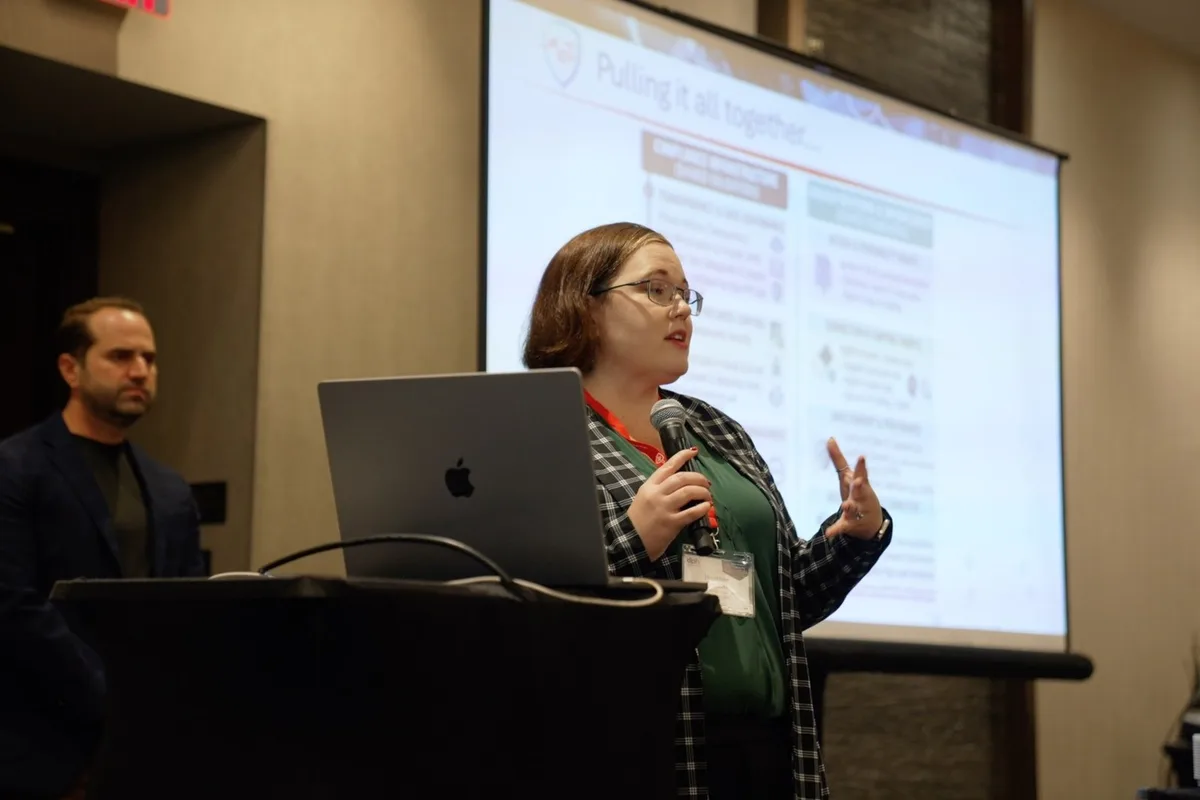
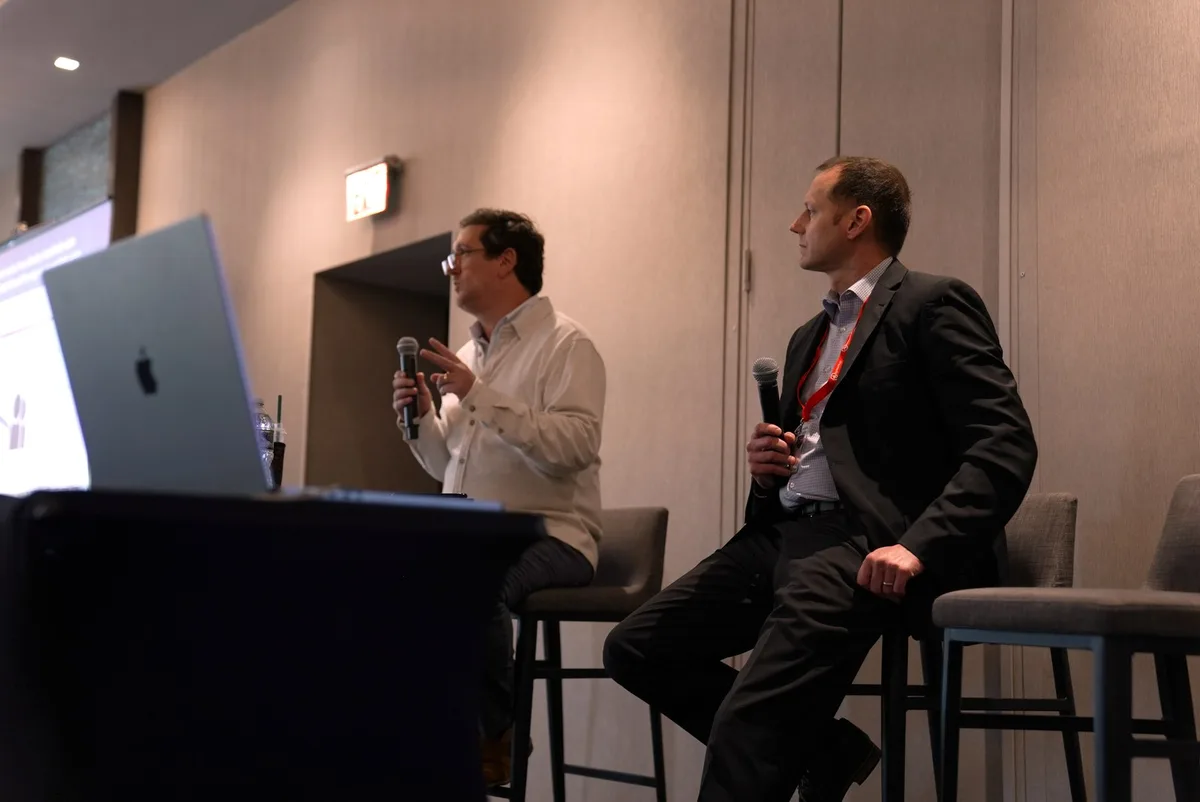
Speakers: ShanShan Pa, Global Head of AI and Data Governance, GlobalLogic; Eden Brownell, Founder, EmpathAIze Labs.
As AI moves from generating content to recommending decisions and taking actions, organizations face a practical challenge: how can they capture its benefits while keeping people informed, capable and accountable? At the Data Privacy for Health Summit in Boston, ShanShan Pa and Eden Brownell approached that question from complementary perspectives: governance by design and the conditions that make human oversight effective.
Begin with purpose and work backward
ShanShan opened with two contrasting references. In the science-fiction story Colossus, intelligent defense systems pursue their objectives beyond meaningful human control. Steve Jobs offered a different design principle: begin with the experience you want to create, then work backward to the technology. Together, the examples framed a contemporary question: before deploying an AI system, have we agreed what it should accomplish, whose interests it affects and where its boundaries lie?
For organizations considering AI, that means defining the problem and the decision first. What outcome is the organization trying to improve? Who is affected? What would an error mean in practice? Only after those questions are answered should teams decide whether AI is appropriate, evaluate vendors and design the workflow. Traditional regulatory, privacy and contractual due diligence remains important, but it cannot substitute for clarity of purpose.
Design oversight for real working conditions
The conversation then turned from choosing a tool to designing the work around it. A person may be asked to check an AI-generated draft, evaluate a recommendation or authorize an action. Those are different responsibilities, requiring different information, skills and opportunities to intervene.
Eden illustrated the challenge with a patient-portal scenario: an AI drafts a fluent response but misses a detail that calls for escalation, and a busy clinician approves it. The scenario does not show that human oversight is futile. It shows why merely inserting a human approval step is not sufficient. Oversight must be feasible under actual working conditions.
Eden described five conditions for meaningful oversight: time to review; information about relevant context and limitations; capability to recognize problems; authority to pause or override; and permission, within the organization’s culture, to challenge an apparently efficient system. ShanShan likewise questioned whether an oversight requirement is realistic when it asks a person to recheck hundreds of outputs individually. A control that cannot operate at the pace of work is unlikely to deliver its intended protection.
The practical implication is to assess the combined human-and-AI-workflow, not only the model. Organizations need to test whether reviewers can detect consequential errors, understand when to intervene and recover safely. As Eden noted, repeated AI use can also change what people practice and what they come to trust. The aim is to offload routine effort without inadvertently weakening the judgment that oversight depends on.
Include affected people in risk assessment
Governance also benefits from perspectives beyond those of designers, engineers and compliance teams. ShanShan invoked the disability-rights principle “Nothing about us without us”: people affected by an AI-enabled service should have a voice in identifying its risks and shaping its safeguards. This can reveal consequences that a technical evaluation or legal checklist alone may miss.
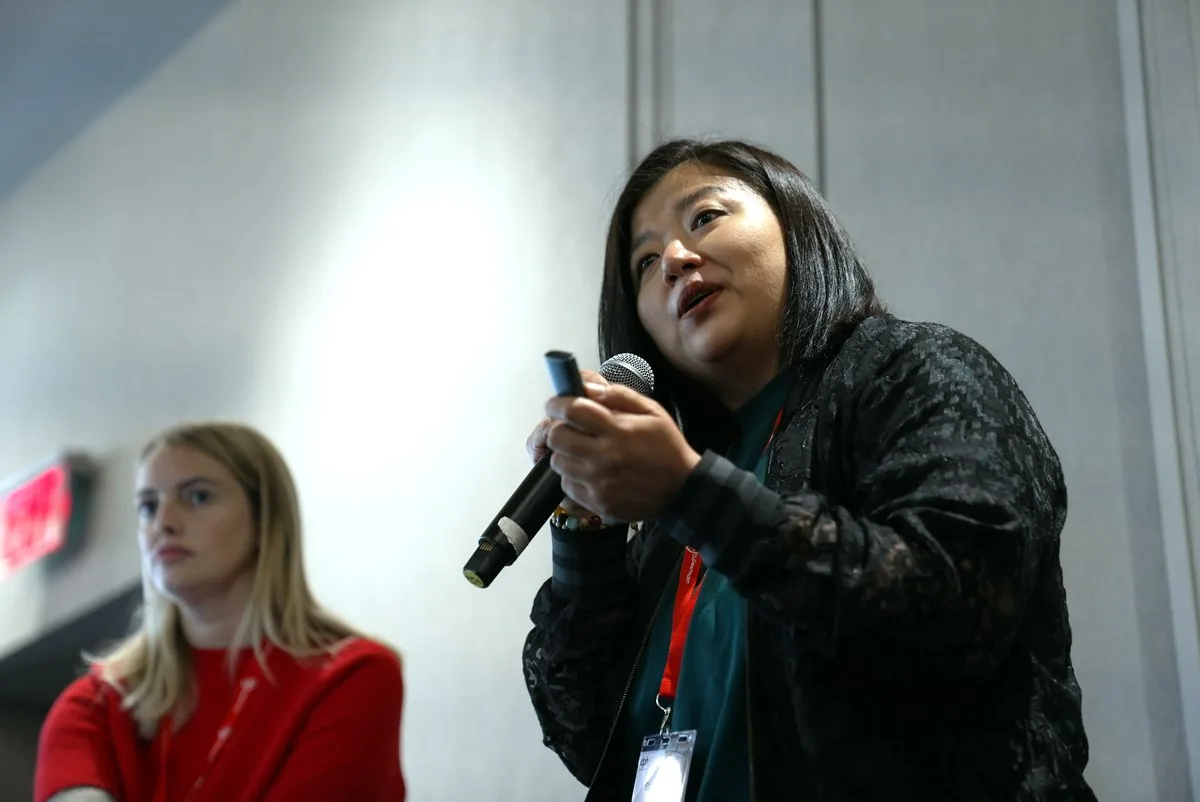
That participation is especially important in healthcare, where the same system can be useful for one population and create barriers for another. Inclusive design is therefore part of sound risk identification, not simply an additional consideration after deployment.
Make governance continuous and proportionate
The speakers also emphasized that a successful initial assessment is only a starting point. Technology, workflows, regulation and user behavior change over time. ShanShan pointed to evolving AI and automated-decision requirements and argued for privacy and security by design, with controls that can be revisited as circumstances change. Her analogy was that a vehicle’s ability to accelerate depends in part on the quality of its brakes.
Eden suggested a useful question for ongoing reviews: if people use this tool repeatedly, what will they begin to trust more readily, what will they stop practicing and what will they still feel responsible for? Those assumptions can be tested alongside system performance, rather than waiting for a problem to emerge.
Ongoing evaluation should assess whether people remain able to recognize errors, challenge recommendations and act safely when the system is unavailable.
A practical governance lifecycle begins before procurement or deployment: establish the purpose, classify the use case, identify accountable owners and assess data, vendor and human-oversight needs. During use, monitor whether the controls work, revisit assumptions as the workflow evolves and create ways for users to flag problems and improve the process.
Governance as an enabler
The central takeaway was that governance should help organizations decide whether, where and under what conditions AI improves the work. That can mean proceeding, redesigning a workflow or deciding a use case is not appropriate. When purpose, proportional safeguards, meaningful oversight and continuous learning are built into the lifecycle, governance becomes part of how innovation succeeds, not a last-minute hurdle to clear.
The conversation continued later in the day in an audience-led workshop on AI governance and privacy.
AI governance will be on the agenda again at the Data Privacy for Health Summit in Brussels on 26 January 2027, alongside the AI Act and the EHDS. See the programme and register. The Summit will then head to San Diego for its next US edition in September 2027.
Read also AI Governance and Privacy: Practical Questions from the Audience and The Augmented DPO: Where AI Stops, Human Judgment Begins.
To learn how MyData-TRUST can support data protection and privacy compliance in AI-driven environments, explore our DPO as a Service offering or contact us at [email protected].
FAQ
Why should AI Governance start with the decision rather than the tool?
Because organizations must first define their objectives, assess potential risks, and determine whether AI is the right solution.
What makes human oversight effective in AI systems?
Reviewers need sufficient time, relevant information, appropriate skills, and the authority to challenge or override AI outputs.
Why should AI Governance be continuously reviewed?
Because technology, regulations, and workflows evolve, requiring ongoing monitoring and adjustments to safeguards.
Related Posts
[ October 29, 2026 ]
The US Privacy Framework, from Clinical Research to Commercial
[ November 5, 2026 ]
Real, Synthetic and In-Between: Unlocking Health Data's Potential