
[November 13, 2026]
Consumer Health Data Laws, Litigation and the Post-HIPAA Reality
Session recap, Data Privacy for Health Summit, Boston, 1 October 2026
Article summary
Explore how evolving U.S. state laws, HIPAA requirements, and privacy litigation are reshaping the protection of consumer Health Data beyond traditional healthcare settings.
The HIPAA Security Rule update as a benchmark
The Department of Health and Human Services proposed changes to the HIPAA Security Rule, originally published in 2003, more than a year and a half before the Summit. The rule is not in effect. Trisha noted that the industry submitted a large number of comments, many of them on the move from “addressable” to “required” safeguards, and that action is expected to take time. The original Security Rule took some six years to finalize.
Trisha was nonetheless positive about the direction. The proposal codifies practices that most security frameworks, such as NIST, already treat as standard: vendor management, multifactor authentication, penetration testing and encryption. Putting these into a program that maintains itself annually would improve privacy and security hygiene across the sector.
Caitlin questioned the wait-and-see approach. HHS and the FTC have long applied a reasonableness standard to security. Even if the proposed rule never becomes final in its current form, regulators investigating an incident may look at it and ask whether the organization came close. Trisha agreed, while warning against adopting every prescriptive element just to be risk-averse. Trisha’s advice was to use this period to build a narrative: regulators, whether OCR, HHS, the FTC or the OIG, want to understand the organization’s story over time, what data it collected, why, and what it did to protect it. Tabletop exercises and a clear view of what product and operations teams really do are better learned now than through enforcement.
When Caitlin asked the room who was already building toward the proposed rule, few hands went up, which Caitlin read as an expectation that much of it may not be codified.
AI systems that touch PHI need a business associate agreement
Earlier in the year, HHS’s Office for Civil Rights made clear that AI systems handling protected health information require business associate agreements. For Trisha, who has worked on both the provider and the technology side, this was already obvious; Trisha put the emphasis on literacy. Covered entities need to educate their AI vendors, because a tool built for fintech, where the Gramm-Leach-Bliley Act sets the privacy rules, may be applied to healthcare without anyone stopping to ask which rules apply. Both parties should know which data elements are shared and when, so that the contract conversation is about real risk rather than about unlimited liability caps.
A participant raised a harder case: a hospital shares data that is not PHI, for example video from cameras used to manage patient flow, and the vendor’s system infers that some people may have visible disabilities. Is the vendor now a business associate? Trisha offered a conservative opinion. Technically there is a transmission of ePHI back to the covered entity. A janitor who incidentally sees PHI on a screen does not sign a BAA, but if the service is intended to produce anything with a medical purpose, Trisha would put one in place. The reason: if an incident occurs and data is exposed, you want the vendor bound, even if its role was tangential.
Caitlin noted how much grey there is in these questions, and that health and finance have always approached that grey more conservatively than other sectors.
State laws: patterns in a patchwork

Washington, Nevada, New York, California and Texas have gone beyond the comprehensive privacy laws with health-specific rules. With legislative stalemate at the federal level and more empowerment at state level, Trisha expects more state action on every front: rulemaking, litigation and attorney general enforcement.
Trisha sorts these laws into buckets. One covers consumer health data outside the classic covered entity and business associate relationship. Another covers biometrics, with Illinois and Texas leading. A third covers specific targets: sale of health data, existing medical privacy frameworks such as California’s, and geolocation data in states like Connecticut. Trisha’s conclusion was that there is no escaping the 50-state survey, although tools can help.
On the comprehensive laws, all states treat health data as sensitive, but they define it differently. Trisha described two broad patterns. Some states, including Florida, Indiana, Iowa, Kentucky, Nebraska, Tennessee, Texas and Virginia, focus on mental or physical health diagnosis. Others, such as Colorado, Delaware, Maryland, Minnesota, Montana, New Hampshire, Oregon and Rhode Island, also cover health conditions. California defines as sensitive any personal information collected and analyzed about a consumer’s health. For wearables, the question is what is being inferred. A device that produces something close to a diagnosis, then shares it with a vendor that commercializes it, sits in a very different place from a step counter.
What happens once data is classified as sensitive also varies: affirmative opt-in before processing in some states, notice and opt-out in others, a right to limit use in California, and Maryland’s strict focus on data sale and what is strictly necessary. Across all of them, Trisha saw the same direction: transparency with users about what is happening to their data.
Caitlin asked the room whether organizations apply a state-by-state approach to sensitive health data or a single national standard. A participant working on orphan drugs and expanded access programs described the situation: GDPR applies to European patients, HIPAA sometimes applies depending on access to medical records, and state laws apply depending on where US patients live. The result is a Venn diagram with a grey zone that outside counsel, inside counsel and technical experts have all tried to resolve. In the end, it comes down to risk appetite. The same participant explained that, from a European point of view, teams reason in terms of the probability of a GDPR fine, while the US picture is greyer: the biotech may rely on falling outside HIPAA and focus on state and local privacy laws, with FDA requirements covering the rest. It gets harder in audits, when different cohorts in the same trial have different levels of protection, and harder still with blinding. Trisha answered that some advisors read the absence of a prohibition as permission, others as a reason to hold back. Taking the most conservative approach everywhere can mean missing legitimate opportunities, which is why many companies still work state by state.
Enforcement and litigation follow the data
Caitlin turned to litigation, described as heating up across privacy and breach. After the wave of cases under Illinois’ Biometric Information Privacy Act, cases under Washington’s My Health My Data Act are now appearing. Trisha is closely watching private rights of action, which give individuals and organized plaintiffs a direct route to court. Trisha described the fight as “moving upstream”: tracking can start as soon as a user lands on a website, and plaintiffs argue that capturing what a person searches for is an interception, as under California’s Invasion of Privacy Act. Plaintiffs have become more sophisticated, organized and resourceful, and for some serial litigants this is the business model.
Trisha cited several signals. Litigation brought in Utah and California against a telehealth company alleged that customers’ medical conditions reached advertising platforms through customer list uploads and tracking tools, despite privacy assurances; the case is not final. A California settlement involving a health publisher concerned ineffective disclosures and articles that suggested conditions to readers. And the FTC’s action over precise location data that revealed visits to health facilities showed how inference turns ordinary data into health data. Drawing on time spent in the health care bureau of the New York State Attorney General’s office, Trisha added that enforcement often starts with aggregated consumer complaints.
A participant asked about the rise of federal claims under the Electronic Communications Privacy Act, which let plaintiffs bring HIPAA compliance into cases about website cookies and trackers. Trisha, whose first in-house role was in a heavily litigated environment, observed that federal regulators and plaintiffs tend to cycle after each other. The advice was again to keep the story straight. With regulators there is usually a conversation and a reasonableness standard; with serial litigants, unless a case ends with prejudice, they keep coming back.
What clients are asking now
Caitlin closed by asking what questions clients bring most often. Trisha’s first answer: “We already have this data; can we use it for another purpose?” The question is especially hard for organizations that wear several hats. At CVS Health, Trisha said, the same organization was at once a payer, a pharmacy benefit manager, a pharmacy, a care provider and a retailer. When a company has a direct-to-consumer relationship, is it outside HIPAA for that activity, and does it still owe the same restrictions? The classic HIPAA tools, data segmentation and minimum necessary, still apply, but so do broader privacy principles, starting with transparency toward the consumer about what is happening to the data.
Takeaway: know your data flows
The post-HIPAA reality is a patchwork of state laws, federal reasonableness standards and private litigation, and it will not simplify soon. What organizations can control is how well they understand their own data flows, how clearly they explain them to users and partners, and how convincingly they can tell their story to a regulator or a court. Caitlin pointed to the IAPP’s published analysis of litigation trends, useful precisely because so many cases settle without public reasoning, and encouraged participants to compare notes with peers. Most of the useful insight in this field, Caitlin said, is still exchanged over coffee.
Want to keep the conversation going? Join us at the next Data Privacy for Health Summit in Brussels on January 26, 2027, followed by our US edition in San Diego in September 2027. Explore the Brussels agenda and register.
Read also The US Privacy Framework, from Clinical Research to Commercial and AI Governance and Privacy: Your Questions, Answered.
FAQ
Does HIPAA protect all consumer Health Data in the United States?
No. Wearables, health apps, and direct-to-consumer services can generate sensitive Health Data that falls outside HIPAA's scope.
Why is compliance with U.S. consumer health privacy laws complex?
Because states have different definitions of sensitive Health Data, consent requirements, and approaches to enforcement.
What are the main litigation risks involving consumer Health Data?
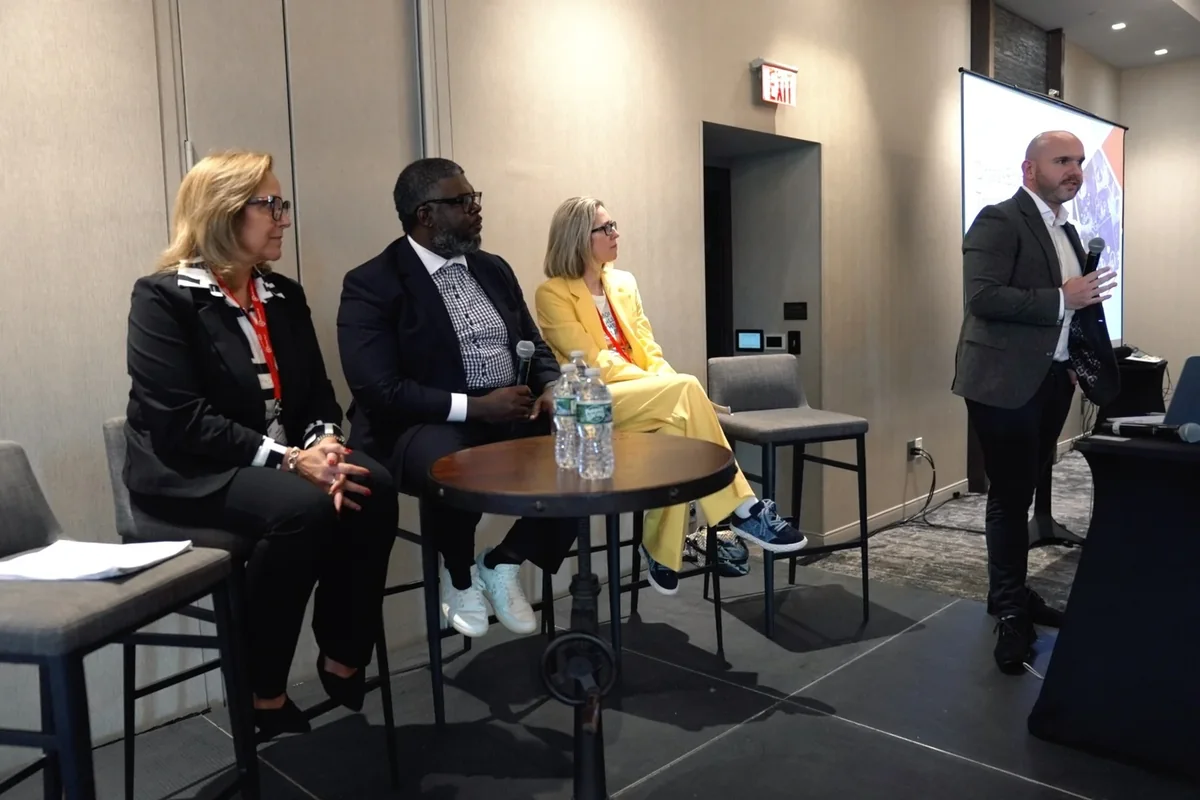
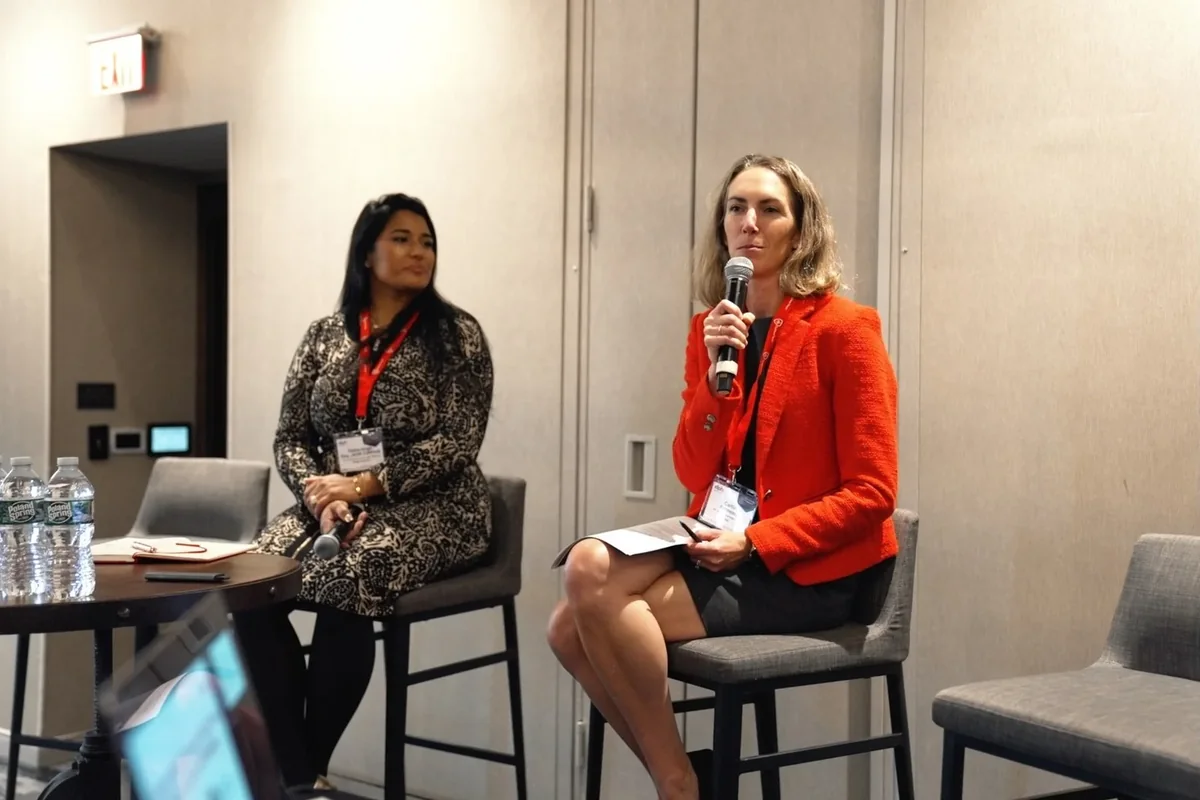
Website tracking, unauthorized sharing of health information, and sensitive health inferences can lead to litigation and regulatory enforcement. Moderator: Caitlin Fennessy, Vice President and Chief Knowledge Officer, IAPP. Speaker: Trisha Singh, Esq., AIGP, CIPP/US, Co-Founder and Chief Legal Officer, Singh Advisory. Health data in the United States no longer lives mainly inside HIPAA. [Wearables, health apps, direct-to-consumer services](https://www.mydata-trust.com/2026/11/13/expanding-globally-what-should-life-sciences-companies/) and AI tools generate sensitive information that federal health privacy law was never designed to cover, and states, regulators and plaintiffs have moved into that space. In the second session of the Data Privacy for Health Summit in Boston, Caitlin Fennessy of the IAPP, the professional association that supports some 100,000 privacy and AI governance professionals worldwide, led a fireside chat with Trisha Singh, who has advised on privacy, cybersecurity and data use in health and technology for more than a dozen years, first in-house at DaVita and CVS Health, now as an external advisor. HIPAA itself is shifting, Caitlin pointed out, even as wearables and consumer services move much of the data beyond its reach. The conversation followed a funnel: federal law first, then the state comprehensive laws and how they treat sensitive data, then health-specific state laws, and finally enforcement and litigation, which are changing what "compliant" means in practice. In Caitlin's experience, health privacy professionals are among the most rigorous in the field, because they deal with so many overlapping layers.
Related Posts
[ November 12, 2026 ]
AI Governance and Privacy: Your Questions Answered
[ November 25, 2026 ]
Cross-Border Health Data Transfers in a National Security Era